


Here we are, entering the final quarter of the year. From now on, it will all be a blur, and before we know it, the Happy New Year messages will start flooding in.
So I thought I would pause and share a few things that have been holding my attention, feeding my imagination, and bringing a little joy. Because maybe you’d like a pause as well.

White Teeth, Zadie Smith
Zadie Smith is such a sharp, incisive writer. It is difficult to believe this was her first novel.
I am enjoying every part of it: the plot, the vividness of her characters, and her witty, sometimes biting observations on British society and human nature. It is intelligent, funny, and consistently unexpected.
She captures the times like like few others. The cultural references, the rhythms of speech, the clothes, the music, the places: none of it feels like decoration. Together, they preserve how a particular London, at a particular moment, looked, sounded, and felt. Perhaps that is what makes White Teeth such a defining book of its generation.
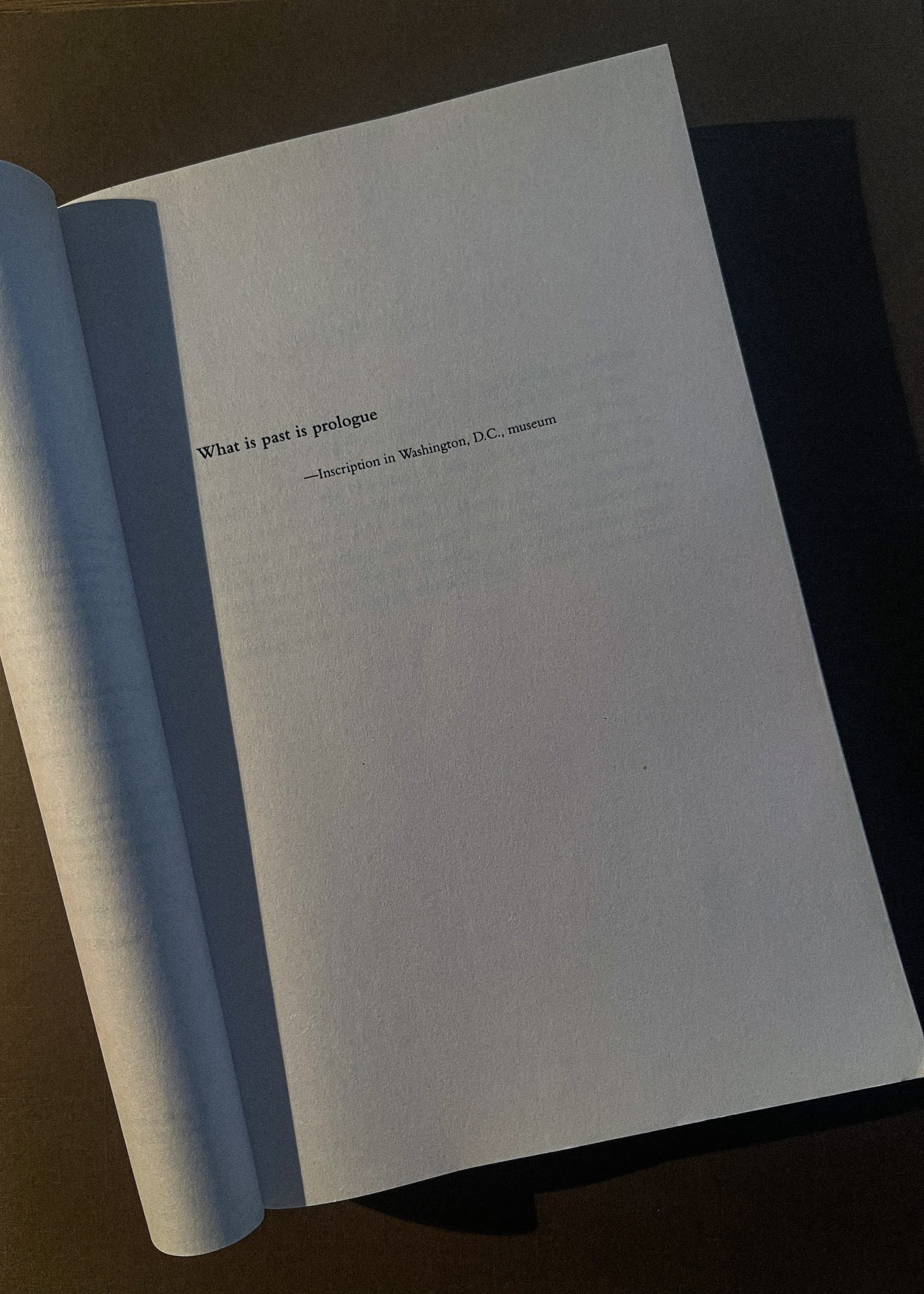
Now, she opens her debut novel with a quote from The Tempest: “What is past is prologue.” If there were any doubt about the relevance of White Teeth today, this sums it all up.
More than twenty-five years later, Irie, Millat, and Magid’s attempts to define themselves would certainly take different forms. Yet the underlying questions remain: how to reconcile an inherited culture with the freedom to define oneself, carry a family’s history without being confined by it, and feel fully at home in a country that still asks where you are really from.
The context has changed. The search for belonging has not.

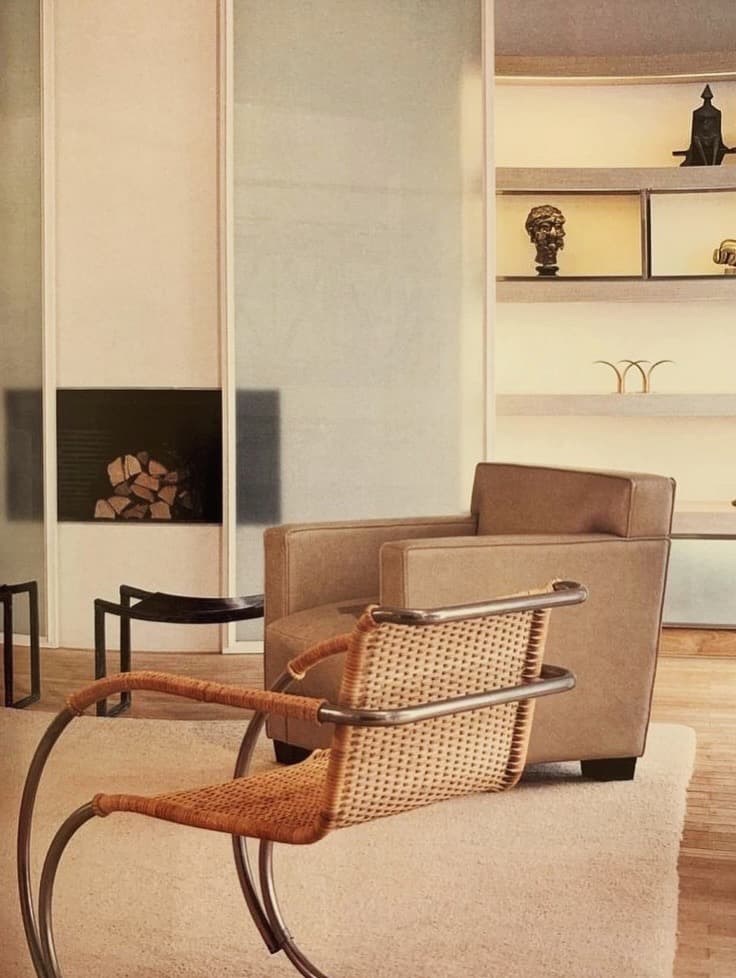
Belgium interior designed by Andrée Putman, AD, March 1999
Andrée Putman, "la grande dame du design français"
She began the chapter of her career that would make her famous at 53, when she founded Ecart and brought forgotten works by Eileen Gray, Pierre Chareau, and Robert Mallet-Stevens back into view.
Her aesthetic was one of radical simplicity: pure lines, black-and-white grids, restrained palettes, and an instinct for making modest materials feel quietly luxurious. Geometry gave her spaces structure, but never made them cold. There was always light, proportion, and a certain sensuality. It is a language I naturally respond to.
But what fascinates me most is her ability to find inspiration anywhere and translate it across disciplines.
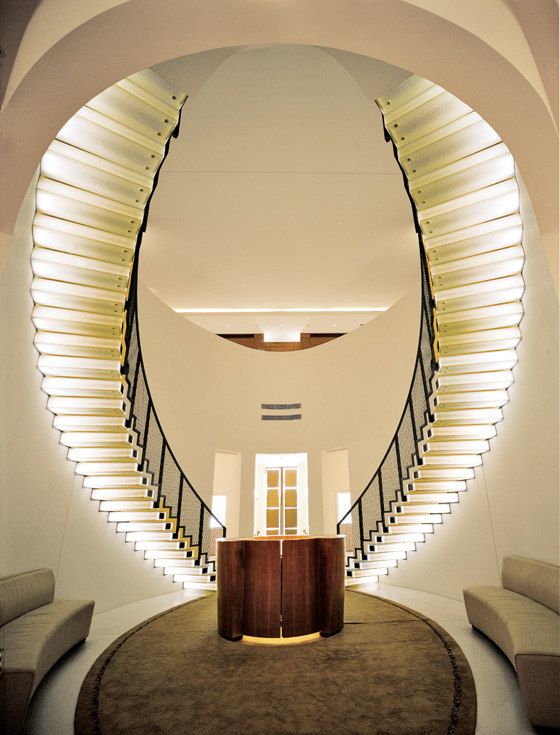
When she met Hélène Pastor, she noticed her necklace and promised to create a staircase like it. That staircase became the heart of Monaco’s Gildo Pastor Center.
A good reminder that scale is secondary. An idea can begin anywhere.

The Clé Ring N.1
One of the perks of designing jewelry is getting to wear the prototypes. One has to make sure an idea works in real life, after all, and I am happy to make that sacrifice.
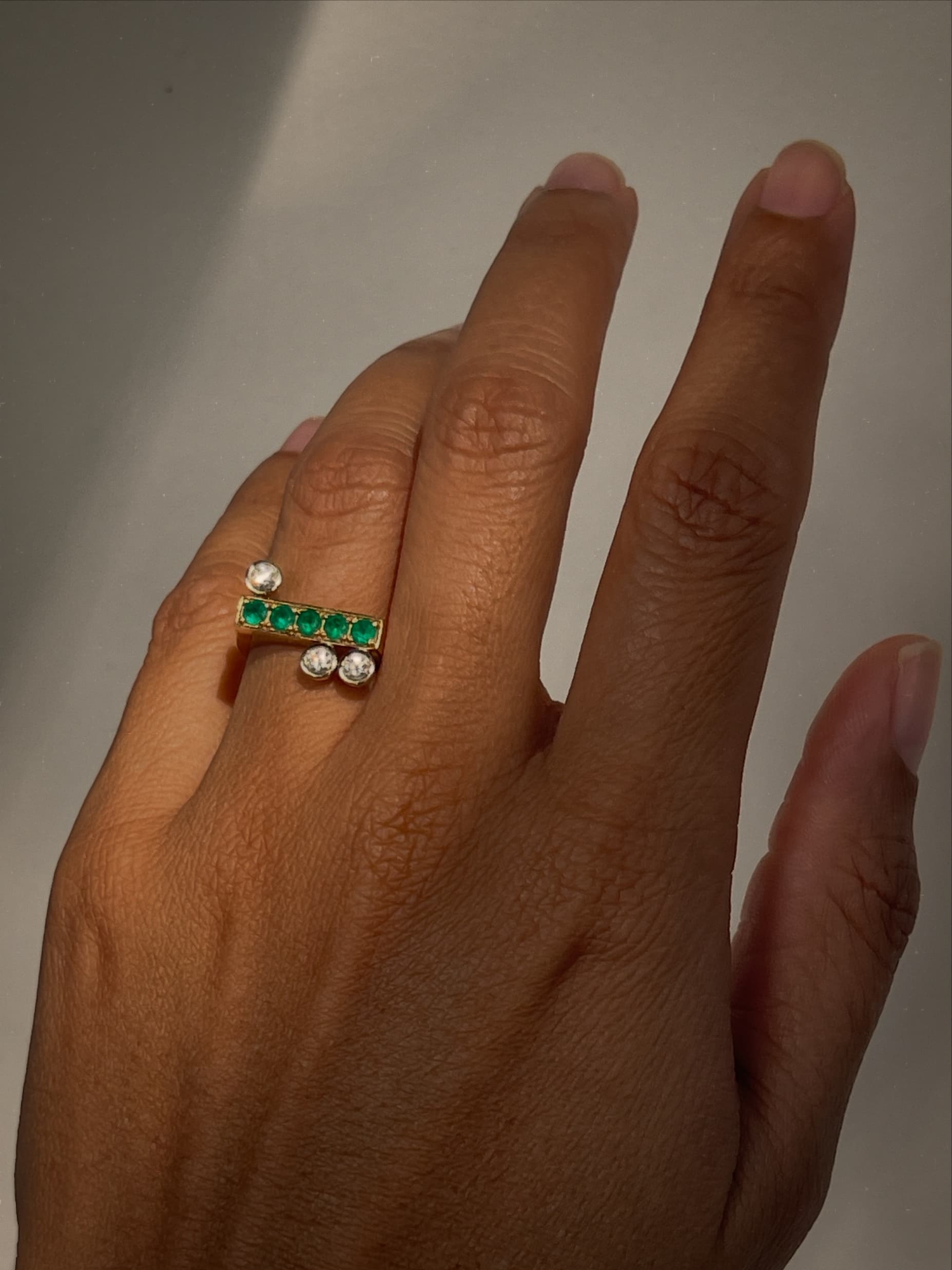
Which is to say that I have been wearing the Clé Ring for a few months now, and I love it. I would not have launched it otherwise.
What I love is the contrast: it is sculptural yet delicate. Its asymmetry and balanced imbalance bring an unexpected twist to a structure that feels almost classical. Then there is the beautiful shade of the Colombian emeralds, punctuated by natural diamonds, and the subtle meeting of yellow and white gold.
Some have already asked about a version with larger accent stones, and I can see it. But there is undeniable beauty in this more restrained scale, especially for everyday wear.

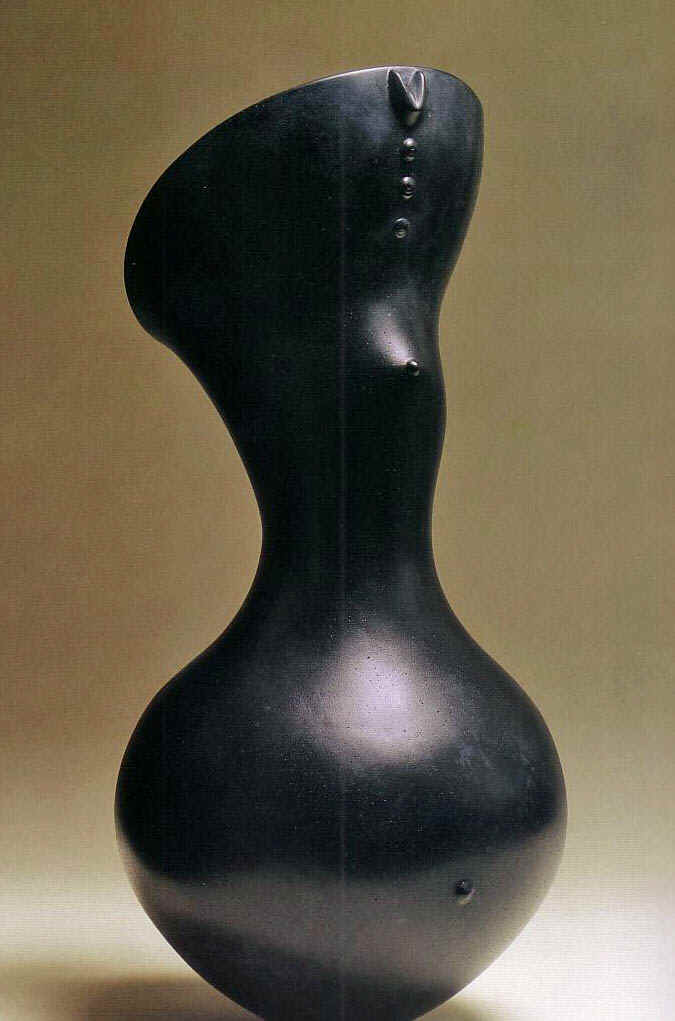
Magdalene Odundo
I have admired Odundo's work for some time and keep returning to it.
Her ceramics feel deeply rooted yet modern. Hand-built and burnished into shades of black and burnt orange, their curves often evoke the human body without ever becoming literal. They have presence, almost a life of their own.
For Odundo, the vessel is never merely an object. It carries thought, memory, and spiritual meaning. Its fragility echoes that of the body, even as ceramic can outlast us by centuries. She considers the void around and within a piece as carefully as the form itself.
Her references move freely across cultures, disciplines, and centuries: from ancient Egypt and Cycladic figures to Yoruba and Zulu traditions, archaeology, theatre, and dance. She does not simply borrow from them. She absorbs that knowledge, strips it back, and arrives at a language that feels both singular and universal.
In its own way, her work speaks to my créolité.
Magdalene Odundo (b. 1950). Untitled. Blackened terracotta. 2001


First of all, Tiny Desk concerts are a wonderful way to discover new music or indulge in your favorite. It's the closest to assisting to the best jam sessions, which in itself is a real treat.
This one is smooth, soulful, and impossible to sit completely still through.
There is something about watching musicians genuinely enjoy playing together. The ease, the chemistry, the way each artist brings a different energy without disrupting the whole.
Refreshing and inspiring.
That’s all for now. Thank you for reading.
Jessie
