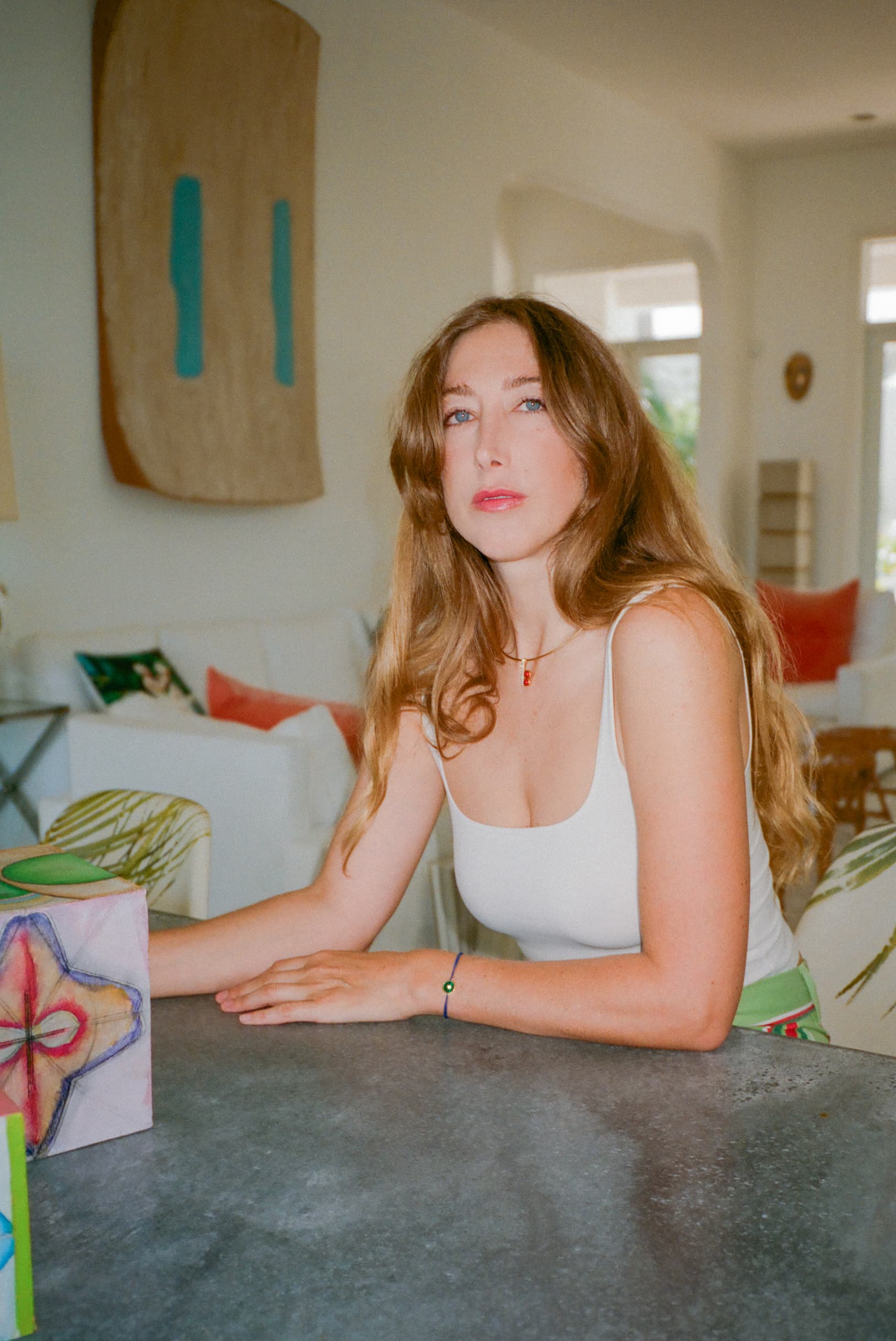
I first met Kyle DeWoody at her home, surrounded by her art collection.
That glimpse into her world sparked my curiosity.
The art one lives with says a lot, but it doesn’t quite replace a deeper conversation. It invites it.
I’m glad to share it with you.
Kyle moves between New York and West Palm Beach, but also between roles.
Collector, curator, advisor. What ties it all together is a way of living with art that feels both instinctive and intentional.
In our conversation, she speaks about growing up in a home where art was not just present, but active. Where making a home was, in itself, an art form.
Her openness stayed with me.
And maybe that is what this conversation holds.
A sense of permission. To look, to feel, to respond without over-defining.
I think you’ll enjoy it.
Jessie

![]()
![]()
CAN YOU TELL US A BIT ABOUT YOURSELF?
KDW: I consult privately for collectors and some commercial spaces, and I curate occasionally when I feel compelled to say something or work with certain artists.
Last September, my friend Zoe Lukov and I organized Duet, a multi-gallery art fair in downtown New York.
So I would say I’m flexible.
YOU GREW UP SURROUNDED BY ART. HOW DID THAT EARLY EXPOSURE SHAPE THE WAY YOU LOOK AT AND LIVE WITH ART TODAY?
KDW: My father is an artist, and my mother a vigorous collector; though I think she is secretly an artist.
Both are very expressive in their collecting and the way they live with their art. Nothing is expected.
These environments not only made art an essential part of home but made the making of home an art.
And then, of course, art is always top of any itinerary, and creative friends are essential for a fascinating life.
DO YOU REMEMBER THE FIRST PIECE THAT STAYED WITH YOU?
KDW: I remember the first artist whose work really struck me was William Kentridge. I was 14.
I grew up seeing art constantly, but the story wasn’t always accessible to me; "the why and the how" hadn’t really factored in yet.
In Kentridge’s work, especially his video pieces, the process is the work.
He might take us through a whole story on a single page with charcoal and eraser.
Whether I understood what I was seeing or not, the mark-making, then erasure, and then more mark-making on the ghost of the former was a powerful gesture.
I don’t know why exactly, but it really brought art alive for me and brought me into the process as well as expanding my ideas of memory and ephemerality.
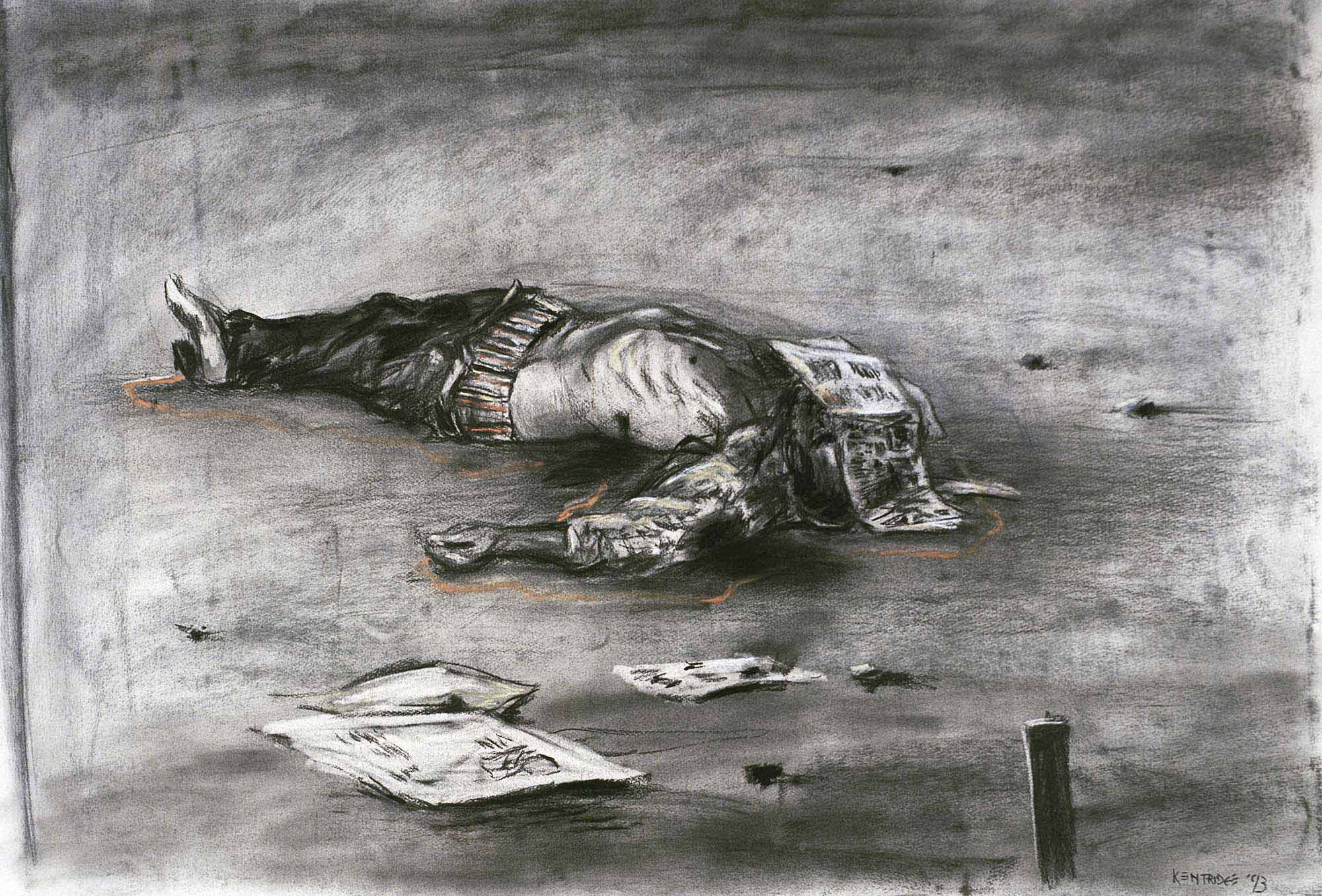
William Kentridge, Drawing for the film Felix in Exile, 1994.
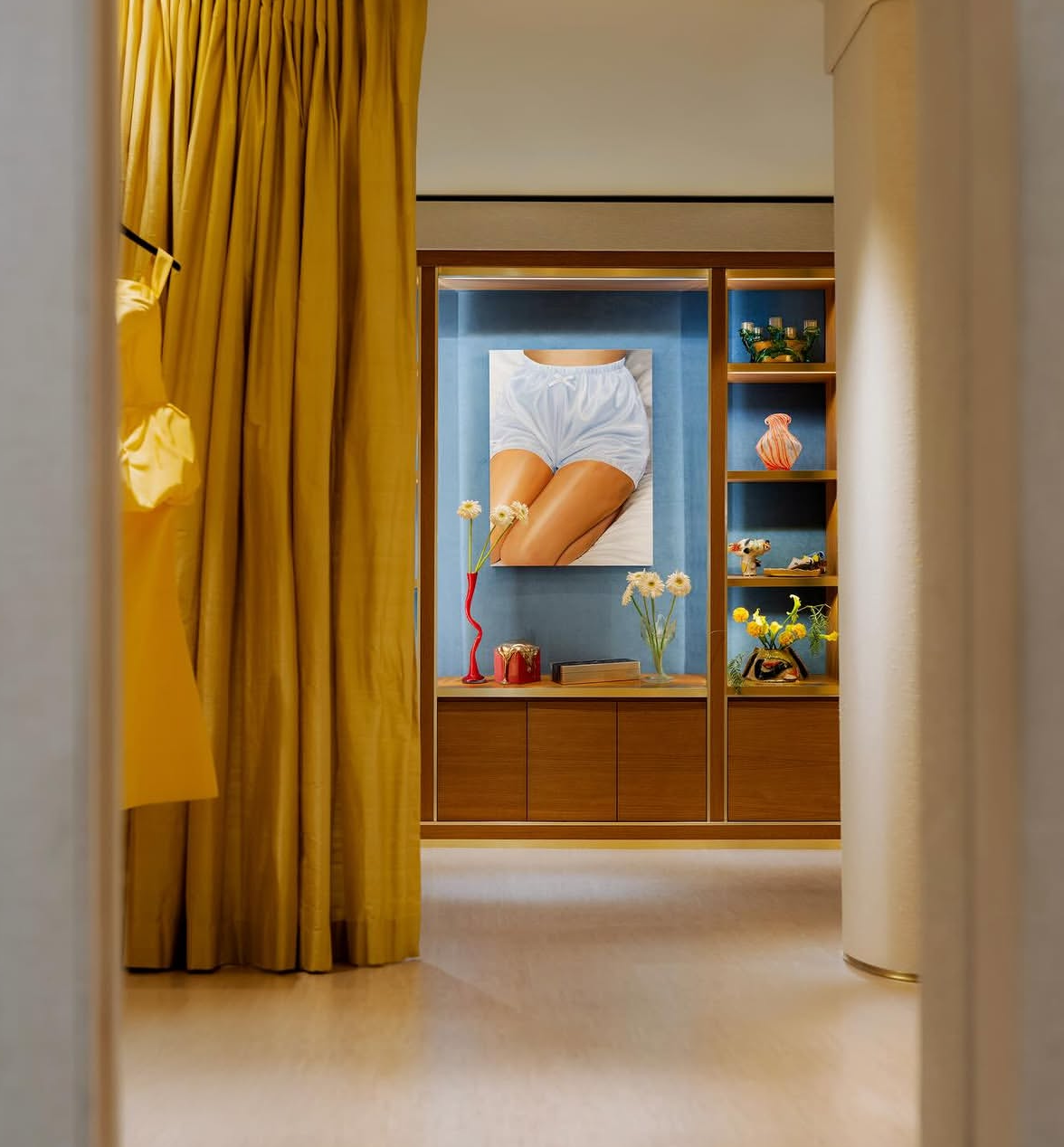
Installation view of Kyle’s curation for Material Girl, on show at Rosie Assoulin, Palm Beach.

YOU OPERATE AS A CURATOR, A CONSULTANT AND A COLLECTOR. DO THOSE ROLES FOLLOW DIFFERENT INSTINCTS FOR YOU?
KDW: I consult privately for collectors and some commercial spaces.
I curate occasionally when I’m really moved to say something or work with certain artists.
In each role I feel like I’m telling a story, just different ones. It’s a form of communication.
Whether it is for a client, for myself, or for the public discourse a curatorial project affords me, the process is often very similar, but the ideas, the resonance I want to create, is very different.
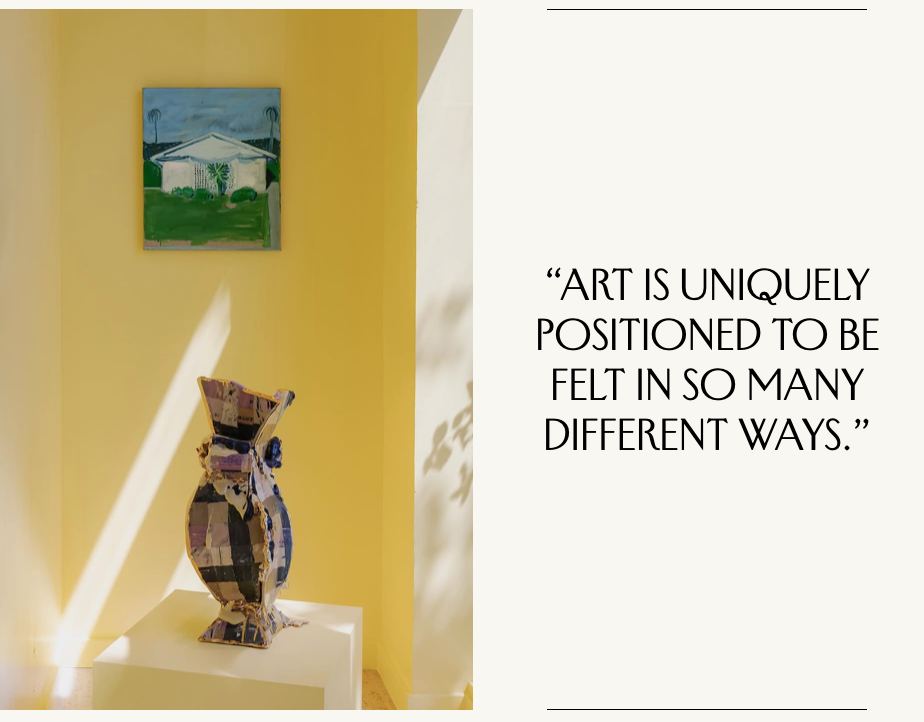
Installation view of Kyle’s curation for Material Girl, on show at Rosie Assoulin, Palm Beach.
WHEN YOU ENCOUNTER A WORK FOR THE FIRST TIME, WHAT KIND OF FEELING OR THOUGHT DRAWS YOU CLOSER, AND WHAT WORK TENDS TO STAY WITH YOU?
KDW: It’s hard to categorize or always explain what strikes me and sticks with me.
There is such a spectrum of work I’m attracted to, whether it is deeply emotional, provocative, or confrontational or something simple, beautiful, inviting, soothing.
Both are so important and nourishing, and I’m grateful I don’t have to choose. That is the beauty of art and the abundance of spaces for art consumption.
Art is uniquely positioned to be felt in so many different ways.
It gets to interface with the world so dynamically, providing a multitude of sensations and experiences.
Such fluidity and nuance are so hard to find these days. Art is a blessing.
AS A COLLECTOR, ARE YOU CONSCIOUS OF BUILDING SOMETHING OVER TIME — A NARRATIVE, A PERSPECTIVE, PERHAPS EVEN A LEGACY?
KDW: I’ll go through periods of excited focus, like only collecting my peers, or only female surrealists, or only works that are a certain color, so I can’t pretend to be too rigorous or committed to a larger narrative.
Hopefully, it leads to a well-rounded collection.
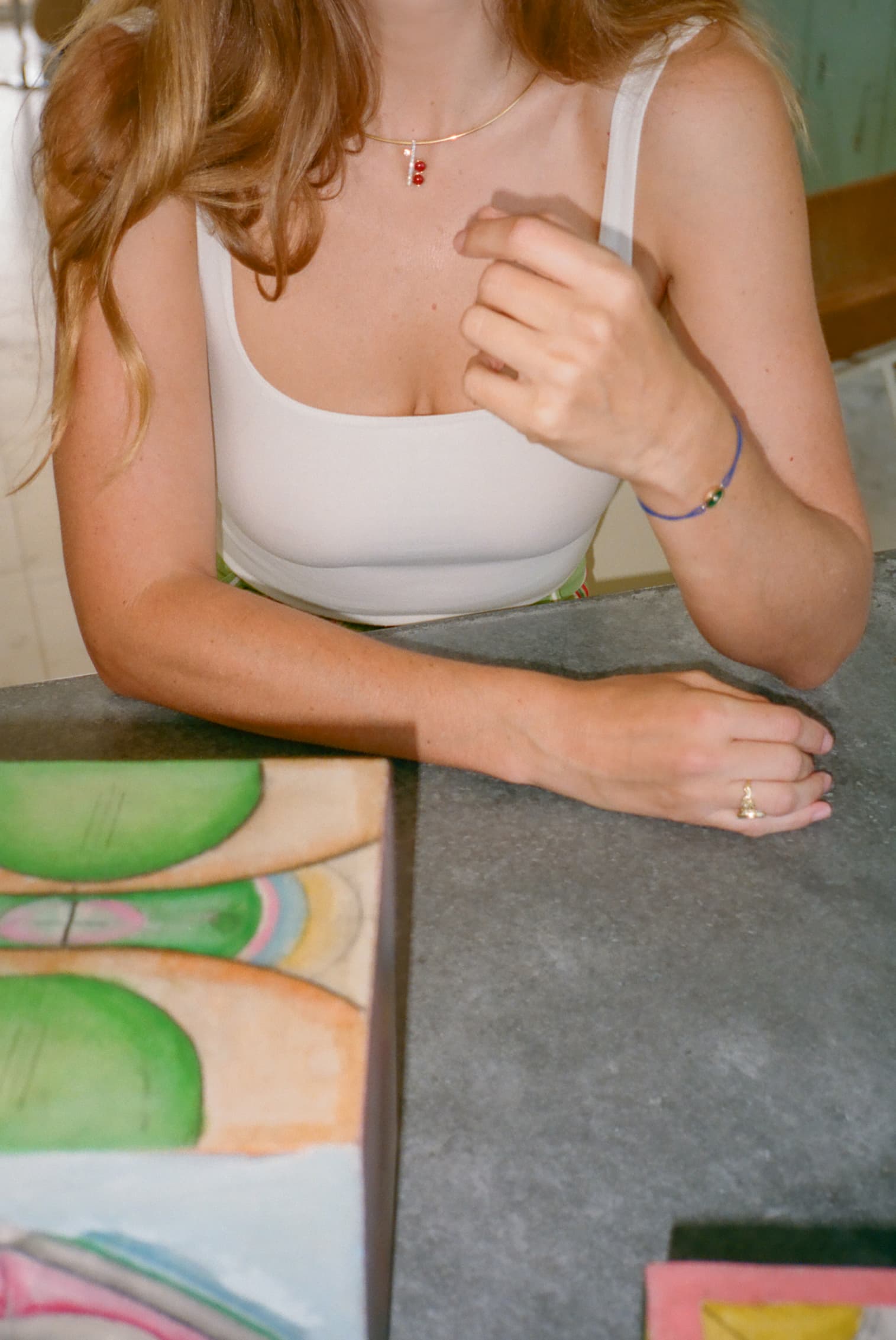
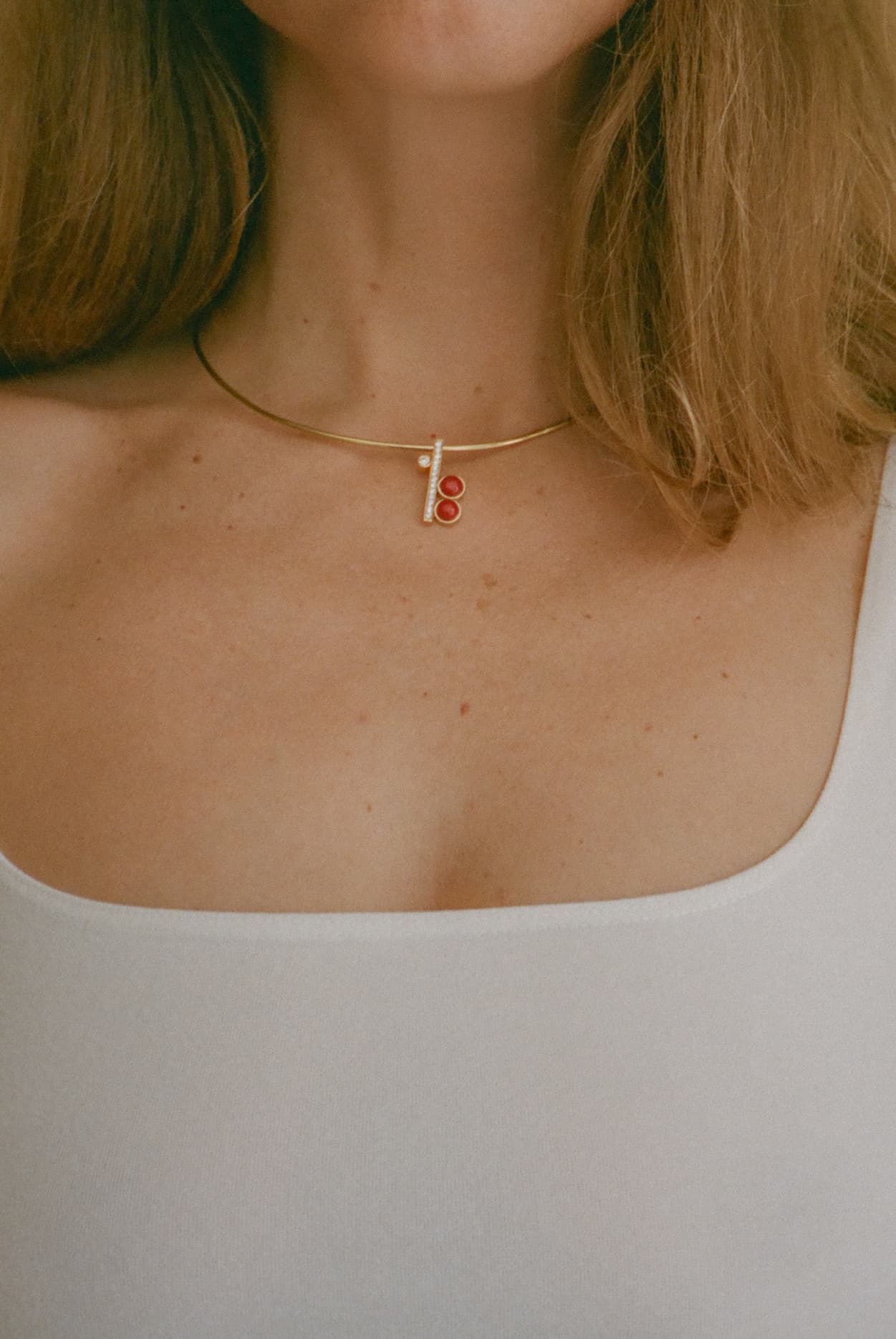
YOU ALSO HAVE A REMARKABLE EYE FOR JEWELRY. HOW DO YOU APPROACH COLLECTING OR CHOOSING JEWELRY, AND WHAT DREW YOU TO THE CLÉ NO.2?
KDW: I love how deco and contemporary the piece is. I was also told to wear coral by a Vedic astrologer, so doctors’ orders.
Seriously though, I love jewelry that feels unique, so I normally do buy a lot of vintage or custom pieces, but there are also so many incredibly creative voices in jewelry right now, you included, that it’s a really exciting time to collect.
While the price of gold is high, I don’t think it will go down, and again, it’s tangible.
It’s also fitting that women are investing so heavily in jewelry right now with its history as a vital financial safety net for women in disempowered times.
Buy those baubles, ladies.
Lastly,
DURING NEW WAVE WEEKEND, SOMEONE SAID THAT ART IS ULTIMATELY WHAT REMAINS OF A TIME AND ITS PEOPLE. WHAT KINDS OF WORK OR IDEAS TODAY FEEL PARTICULARLY URGENT OR EXCITING TO YOU?
KDW: What an amazing window into the emotional and mental state of the times art can provide.
It’s interesting because last year alchemy and mysticism felt very potent and exciting in art. And we really did need to believe in magic and the “supernatural” or “impossible being possible”.
Now I’m seeing a focus on the mundane and everyday elements of life: furniture, modern still lifes, simple forms, and portraits. And I’ve been trying to discern why that is so appealing right now.
Is it that the structures in our life feel so flimsy, so untenable, that we need to ground ourselves in the banal and tangible?
Is it that the focus therefore become on process and materials and brush strokes, as a reaction to AI?
Or is it just that the world is so chaotic, we need stillness and peace?
I’m not sure yet.